
Halton Hills Public Library is committed to creating welcoming, inclusive spaces where everyone feels respected, represented, and supported.
This page highlights Pride-related programs, reading lists, community organizations, and learning resources for 2SLGBTQIA+ individuals, families, caregivers, and allies. Whether you are looking for support, information, or stories that reflect diverse experiences, we invite you to explore the resources below.
Rainbow Resources

Rainbow Reads & Media
Discover curated reading and viewing lists for all ages.
Pride Programs
One Book, One Halton Hills
An Evening with Loghan Paylor
Tuesday, November 10 at 7:30 p.m.
John Elliott Theatre
This year, you are invited to dive into a story that blends history, magic, and unforgettable characters, and then come together as a community to share the experience.
Loghan Paylor is a queer, trans writer who lives in Chilliwack, BC. They are the author of the #1 national bestseller, The Cure for Drowning, which won the 2026 CBC Canada Reads competition.


Community Resources
The following organizations provide education, advocacy, peer support, health resources, and community connections for 2SLGBTQIA+ individuals and allies.
Local & Regional Supports


Youth Supports
National Organizations


Francophone Supports

Understanding Terminology
Language and terminology continue to evolve, and individuals may use different words to describe their own identities and experiences. The following definitions are intended as general educational information and are adapted from resources including the Ontario Human Rights Commission.
A person’s internal and individual experience of gender. This may include identifying as a woman, man, both, neither, or anywhere along the gender spectrum.
How a person publicly expresses or presents their gender through appearance, clothing, behaviour, voice, pronouns, or other forms of expression.
An umbrella term used to describe people whose gender identity differs from the sex they were assigned at birth.
A term used to describe a person whose gender identity aligns with the sex they were assigned at birth.
A person’s emotional, romantic, and/or sexual attraction to other people.
The ongoing practice of supporting, advocating for, and standing alongside 2SLGBTQIA+ individuals and communities.
Pronouns & Inclusive Language
Pronouns are words used in place of someone’s name, such as she/her, he/him, or they/them.
Using a person’s correct pronouns is a meaningful way to show respect and help create inclusive spaces. It is important not to make assumptions about someone’s pronouns. If you are unsure, it is okay to ask respectfully or share your own pronouns if you are comfortable doing so.
Everyone’s experience and identity are unique, and the language people use for themselves may differ.
Ways to Create Inclusive Spaces
-
Don’t assume pronouns
-
Normalize introductions
-
Respect chosen names
-
Apologize briefly if mistakes happen
Learn about Pride Flags
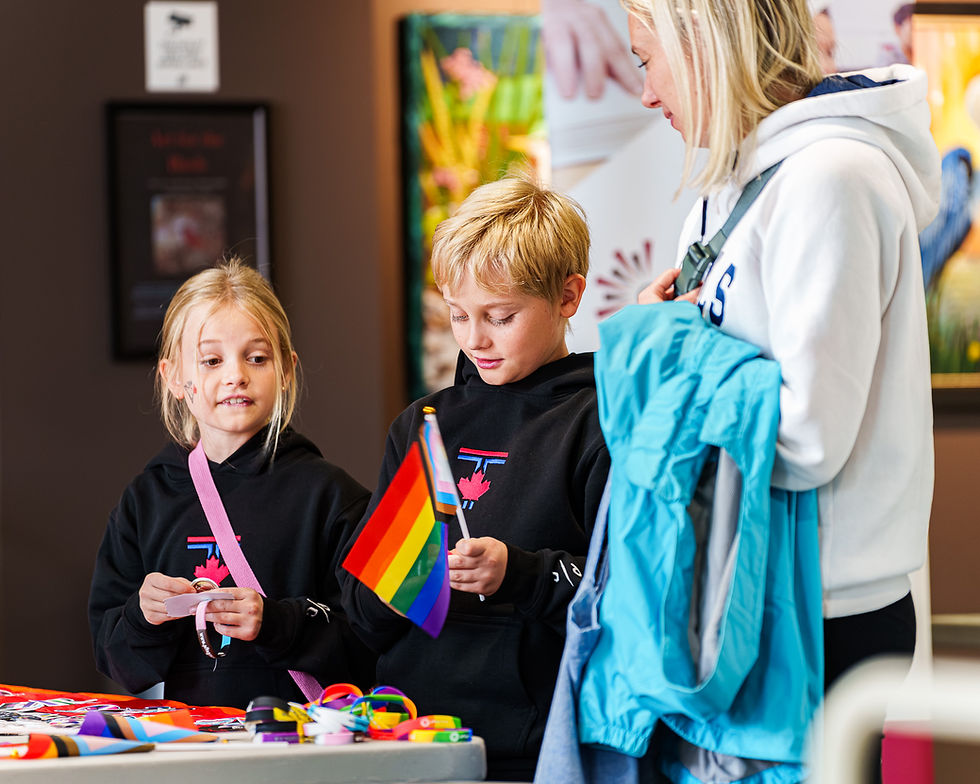
Pride flags are symbols of identity, community, visibility, and support. Many flags represent specific identities and experiences within the 2SLGBTQIA+ community.


HHPL’s Commitment to Inclusion
HHPL is committed to equity, diversity, inclusion, and belonging in our collections, spaces, services, and programs.
We strive to:
-
Provide welcoming and inclusive spaces
-
Reduce barriers to access
-
Reflect diverse voices and experiences
-
Support lifelong learning and community connection
-
Foster respect, empathy, and belonging